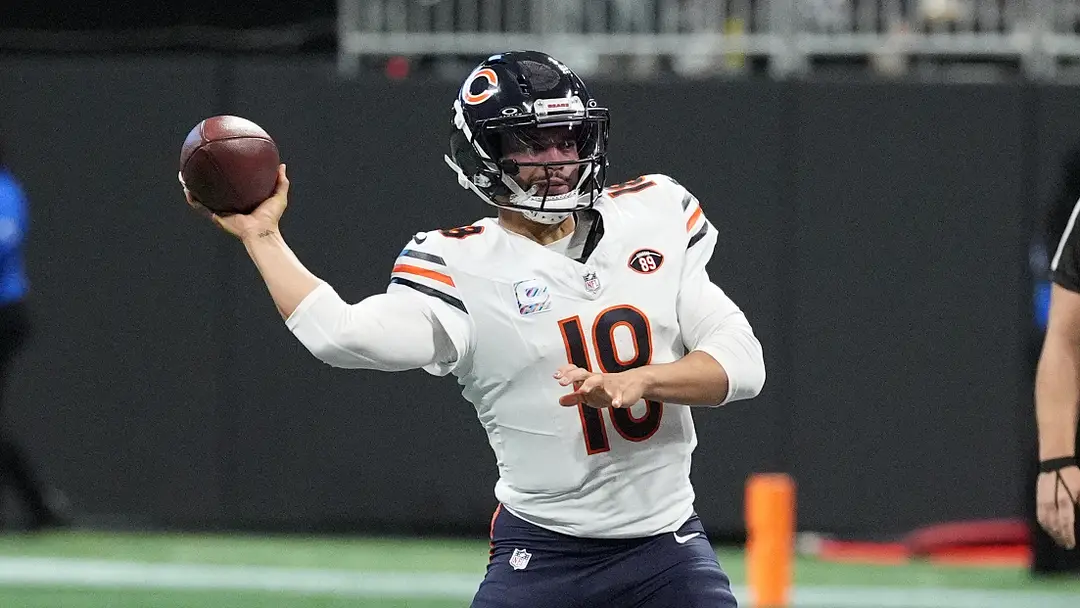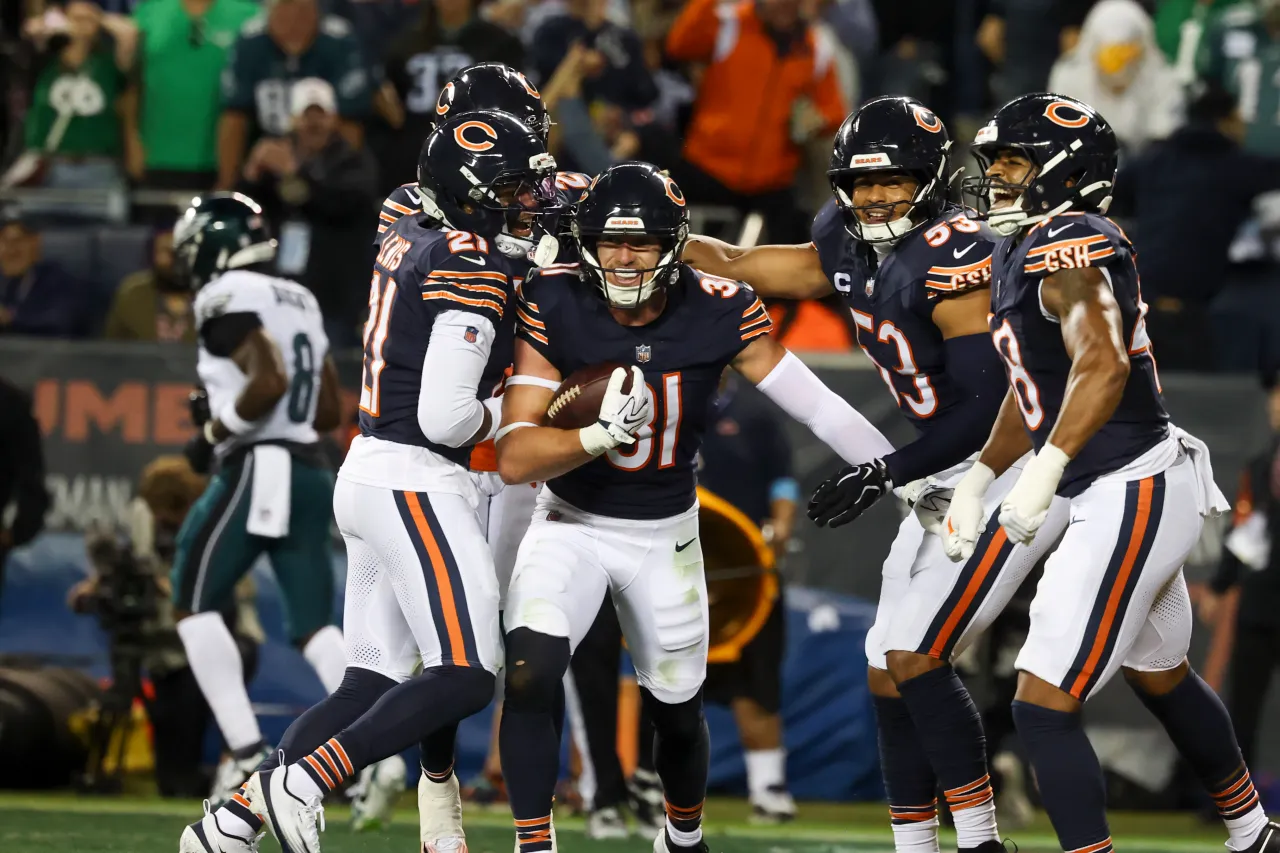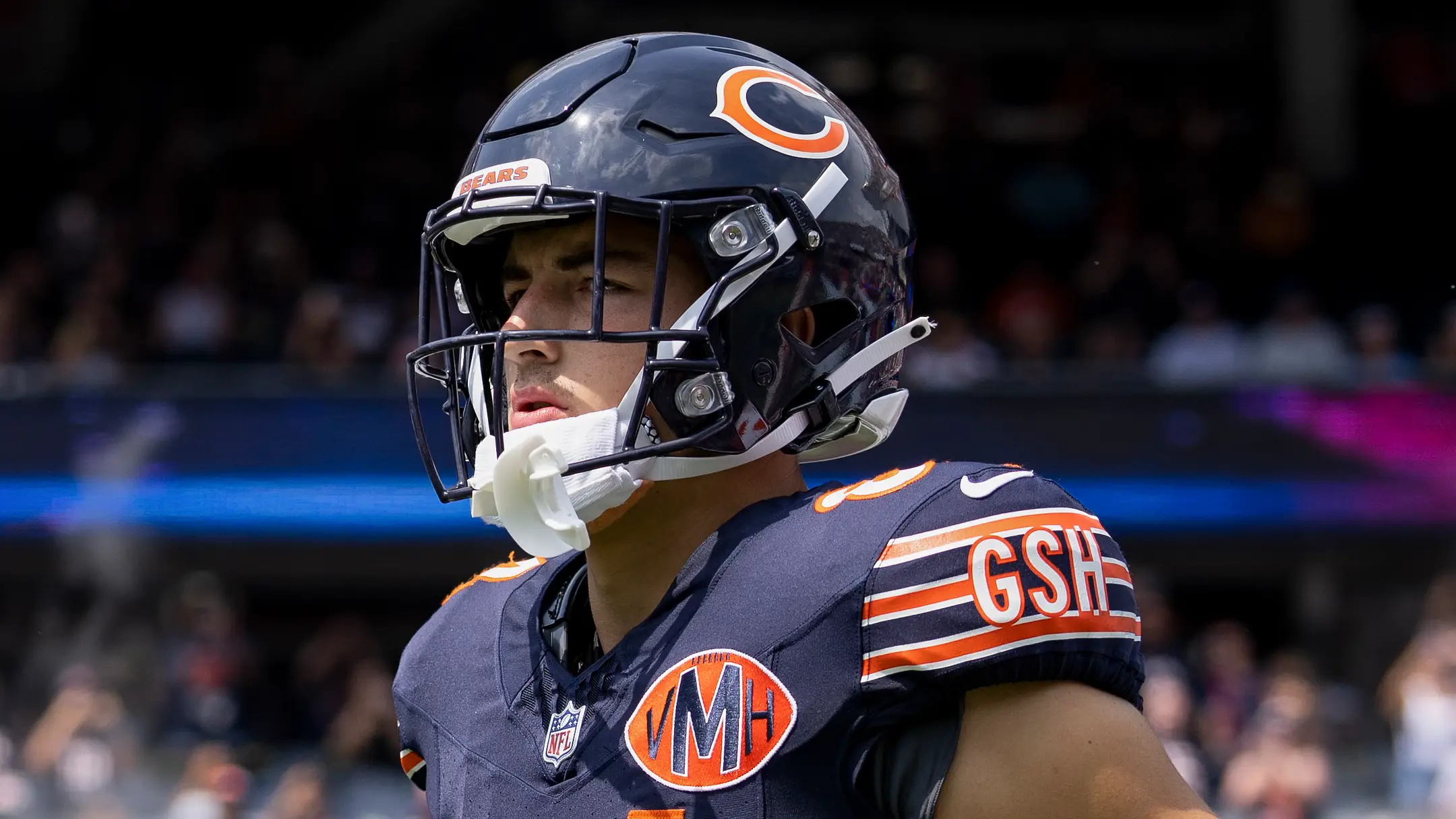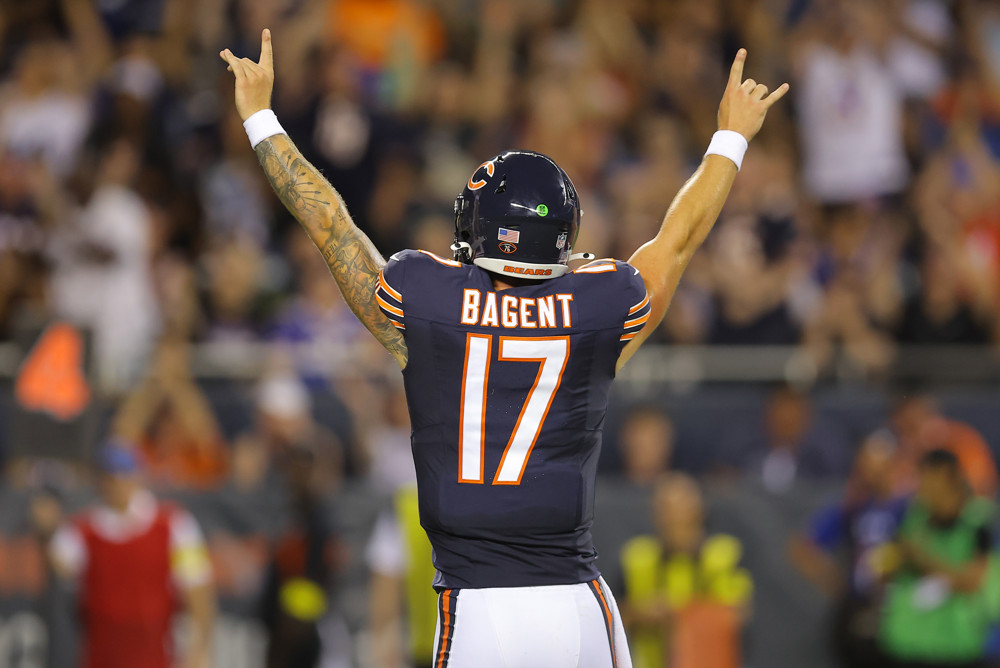
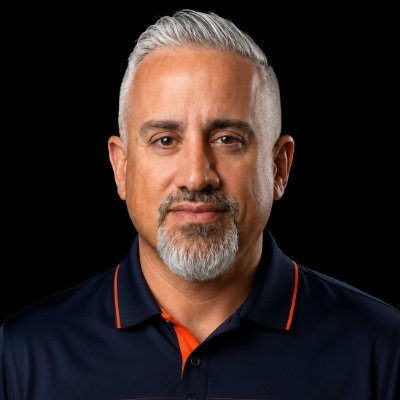
Trade chatter around Tyson Bagent surfaced at the 2026 NFL Combine, and it didn’t take long for league-wide speculation to follow.
With the Chicago Bears firmly committed to Caleb Williams as their franchise quarterback, the question becomes legitimate: Should the Bears consider moving their backup quarterback if the market is real?
General manager Ryan Poles has consistently shown a willingness to explore value plays. If another team believes Bagent can compete for a starting job, the Bears have a decision to make.
"I love Tyson, and that's one that kind of pulls at your heartstrings a little bit because he's someone that you care about so deeply," Bears coach Ben Johnson said at the NFL Combine. "He's a hell of a football player. At some point, you want to see him have a chance to do it himself. We'll always do what's best for our team and organization. I do think there's a lot of merit to having a strong No. 2 quarterback; he certainly fits that bill.
"I'm of the mind that he's probably one of the best 32 (QBs) in the NFL, his preseason tape over the past few years have probably confirmed that, in my opinion. If I took myself out of the equation, I want what's best for him, if he would like an opportunity to start, I certainly hope he can get that."
Here’s the case for and against a potential trade.
Why Trading Tyson Bagent Could Make Sense for the Bears
The first argument is asset management.
Bagent is on a team-friendly contract and has starting experience. In a league where quarterback depth is scarce, that profile has value. But if Chicago could flip a backup quarterback for second-round draft capital, that aligns directly with Poles’ long-term roster-building philosophy.
MORE: Chicago Bears Left Tackle Question Intensifies After Coach’s Comments
Second, there's that whole Caleb Williams guy. He's the present and future. If the Bears believe a veteran backup can do the job at a similar cost, converting Bagent into draft capital preserves flexibility for other positions, particularly along the offensive line and defensive front.
Third, timing. If Bagent’s value peaks because of the Combine buzz, this may represent the optimal sell window. There are several teams that have major questions at quarterback this offseason (the Cardinals and Jets come to mind). The Bears could maximize Bagent's trade value this offseason if they move him before those teams commit to a younger option in the 2026 NFL Draft.
Why the Bears Should Be Careful Moving Tyson Bagent
Depth at quarterback matters. Sometimes, it can be the difference between a team making the playoffs and being sent packing.
Bagent knows the system, understands the locker room, and has already taken meaningful snaps in Chicago. He's a Ben Johnson guy, too.
Continuity behind Williams carries value that doesn’t show up in trade compensation.
There’s also the developmental argument. If Bagent continues to improve, his value may increase further. Trading him prematurely could leave the Bears with two problems: a backup quarterback issue and an asset viewed as a cheap sell.
What This Means for the Chicago Bears' 2026 Offseason Strategy
The decision ultimately hinges on Tyson Bagent's market.
If a quarterback-needy team presents meaningful draft compensation (has to be a second-round pick, right?), Poles will listen. But unless the return meaningfully strengthens Chicago’s draft position, keeping a reliable, system-ready backup may be the safer path.
The Bears are building around Caleb Williams. Protecting that investment includes protecting the quarterback room.
Comments
Join the Conversation
Sign up to comment on this story
Create a free BearsTalk account to comment, earn points, and join the community.
Loading comments…